A buyer under contract in Southern Highlands usually does the same thing when the resale disclosure package lands in their inbox. They scroll past the CC&Rs, skip the meeting minutes, and go straight to the dues line. If the number matches what the listing agent quoted, they move on. The reserve study sits in the package unopened.
That habit is about to cost someone real money, because the dues number on that page is not the whole story anymore. Nevada's Assembly Bill 356 gives homeowners associations across the valley until December 31, 2026 to strip out nonfunctional turf, with a harder enforcement line landing January 1, 2027, when Colorado River water can no longer be used to irrigate decorative grass on property that isn't zoned exclusively for single-family use. That includes the medians, entry corridors, and landscaped monuments that Southern Highlands' master and sub-associations maintain on behalf of every homeowner. The fee you're reading today reflects last year's landscaping contract. It doesn't yet reflect what it costs to rip that landscaping out.
The Fee Is Really Two Fees, and Neither One Is Fixed
Southern Highlands isn't one HOA. It's a master association layered under more than ten distinct guard-gated and non-gated enclaves, each with its own sub-association, its own budget, and its own landscaping footprint. The master plan fee that every owner pays, somewhere in the neighborhood of $55 to $62 a month, covers community-wide items like the roving courtesy patrol and the parks. On top of that, each enclave charges its own sub-association assessment, and that's where the spread gets wide.
The Estates, the guard-gated golf-frontage enclave where completed sales have run around $3.25 million as of spring 2026, carries a master-level assessment in the roughly $400 to $600 a month range. Olympia Ridge, the elevation-and-view-focused ultra-luxury enclave, sits in a similar band. The Foothills, a mid-luxury guard-gated section, runs closer to $225 to $320 a month. Christopher Collections, a smaller 54-home gated enclave, layers a sub-association fee of roughly $267 to $357 on top of the master fee, for a combined monthly obligation in the $320 to $420 range. Tuscan Cliffs, the hillside Mediterranean-style enclave on the western edge of the community, has completed sales with a median around $1.3 million as of spring 2026, with home prices ranging from the high $700,000s for older semi-custom homes up to nearly $2.8 million for the largest hillside estates.
None of those numbers include golf. Southern Highlands Golf Club operates as a separate private membership, and homeownership in any enclave doesn't come with course access attached.
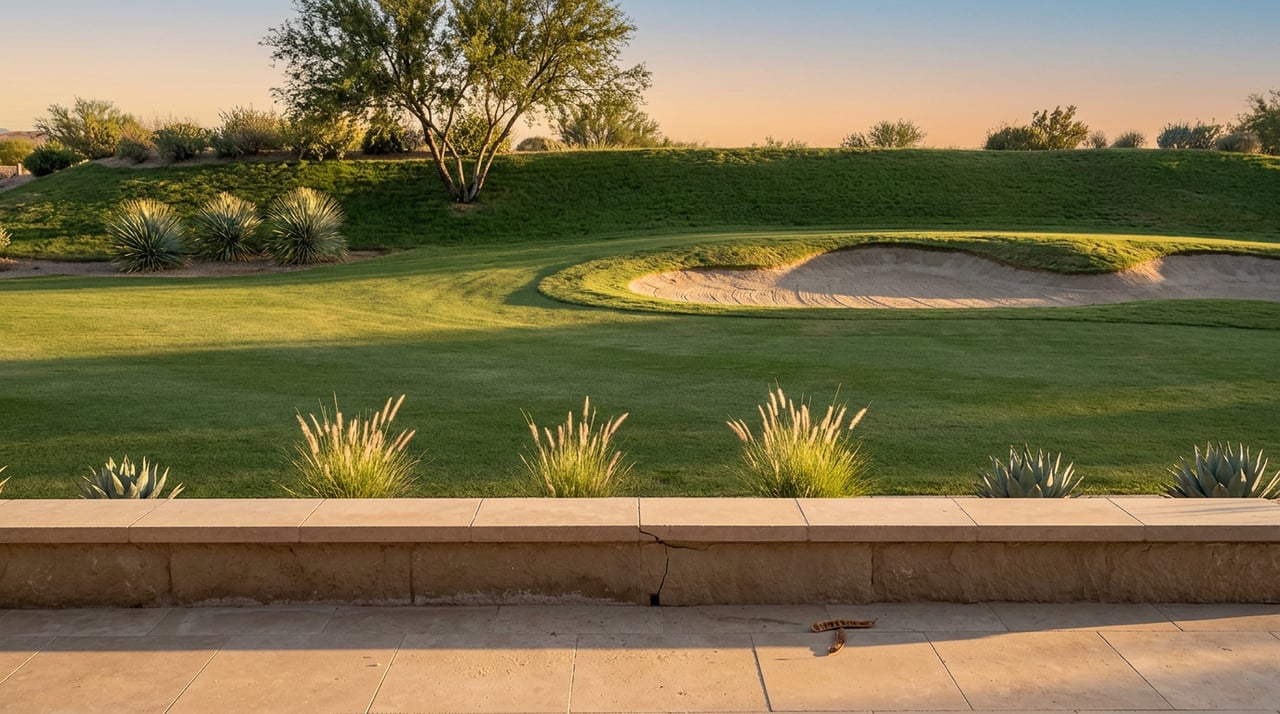
What all of those fees have in common is what they're actually funding: guarded entries, private patrol, and landscaped common areas. The Southern Highlands Community Association's own FAQ page spells out that a portion of every month's assessment goes toward a reserve account for future repairs, and that any change from turf to desert xeriscape on a homeowner's own lot already requires architectural review. That review process exists because the community was built with a specific, water-heavy landscape identity in mind. Large stretches of medians, entrance monuments, and slope areas were planted with the kind of green that AB356 was written to eliminate.
What "Nonfunctional" Actually Means Here
The Southern Nevada Water Authority's own guidance draws the line clearly. Turf along private streets, in medians and roundabouts, and in HOA-managed common areas that don't provide a recreational benefit counts as nonfunctional, regardless of who owns the property. Grass inside a homeowner's own front or back yard is exempt. So is grass on active park and school fields.
That distinction matters because it means the law doesn't touch what happens inside your fence line. It absolutely touches what a master association like Southern Highlands' has to maintain at every gated entrance, every landscaped roundabout, and every slope facing a private street. The City of Henderson's own summary of the law puts the removal deadline at December 31, 2026, with the water restriction taking effect the following day.
The financial mechanics behind that deadline are already causing friction elsewhere in the valley. A lawsuit filed in Clark County District Court in January 2026, led by attorney Sam Castor and naming plaintiffs including a Summerlin resident and a Henderson resident, alleges that turf removal carried out under AB356 has killed roughly 100,000 mature trees and caused close to $300 million in damage, largely because stripping grass out from under established tree canopies disrupts the irrigation those trees were depending on. A judge temporarily limited certain enforcement steps in late January 2026 while that dispute plays out. None of that erases the underlying deadline. It does mean HOA boards across Southern Nevada, Southern Highlands included, are having to make conversion decisions carefully, with real cost and real tree-canopy consequences attached, rather than treating this as a simple landscaping swap.
Why Age of the Enclave Changes the Math
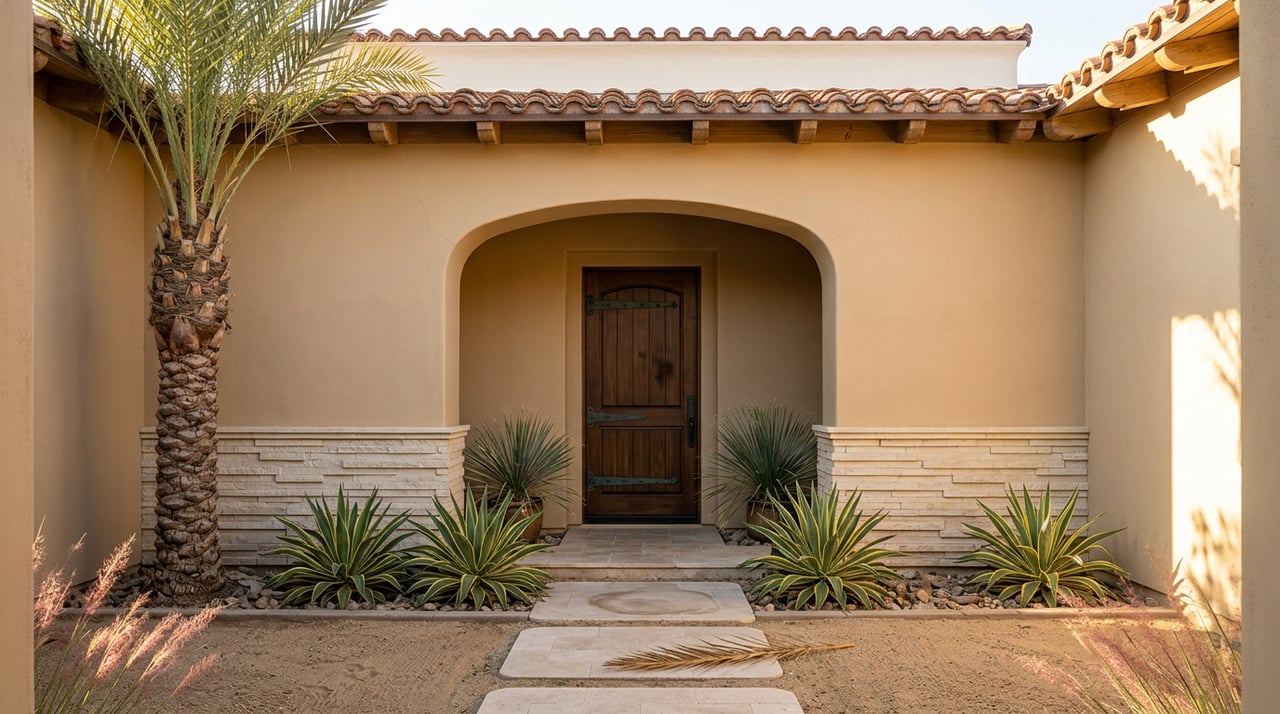
Here's the piece that doesn't show up in a listing brochure. Southern Highlands opened its first phases in the late 1990s and expanded through the 2000s, which means its oldest enclaves, including sections of The Estates and the original Villages, were landscaped during an era when lush, Tuscan-inspired green space was the entire design language of the community. Newer enclaves built closer to the 2010s and 2020s were more likely to incorporate xeriscape from the start, simply because water costs and design norms had already started shifting.
That means two enclaves paying similar monthly dues today can be sitting on very different exposure to a 2027 capital project. An older enclave with more decorative turf along its entry corridor and slope areas has more square footage to convert, more contractor cost to absorb, and a shorter runway to fund it before the deadline hits. A newer enclave that was already xeriscaped when it was built has comparatively little left to do. The dues number doesn't tell you which one you're buying into. The reserve study does, if you actually read it.
A reserve study won't say "AB356 compliance" in plain language. It will show a capital line item for landscape conversion, or it won't, and that absence is itself information.
What to Actually Request Before You Close
Nevada's common-interest community law, NRS Chapter 116, already requires HOAs to hand over budget disclosures, reserve study summaries, and CC&Rs during the resale disclosure window. Most buyers request this as a formality. Given the timing right now, it's worth treating it as the actual due diligence step it's meant to be.
Before writing an offer on a home in any Southern Highlands enclave, ask the association or your escrow team for:
- The current reserve study and its most recent update date
- Whether the study includes a line item for turf conversion or landscape retrofitting tied to state water restrictions
- The history of special assessments in that specific sub-association over the past five years
- Whether the master association has published a compliance timeline for common-area turf removal ahead of the December 31, 2026 deadline
If the reserve study is more than a couple of years old, or if it doesn't mention landscape conversion at all, that's not automatically a red flag. It might mean the enclave already converted years ago. It might also mean the board hasn't planned for it yet, which is exactly the kind of gap that turns into a special assessment on your first year as an owner rather than the seller's problem to solve.
A Few Questions Worth Asking Directly
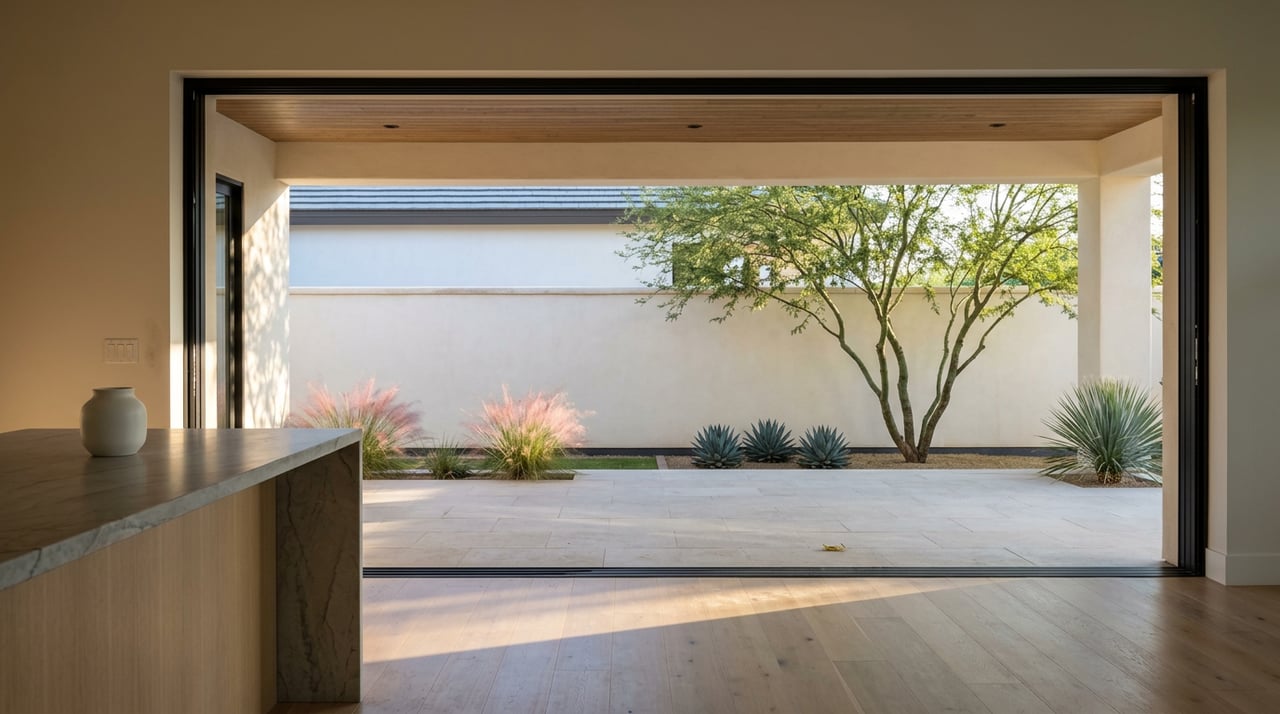
Does this affect the grass in my own backyard? No. The law specifically exempts single-family front and back yards. It targets HOA-managed common areas, medians, and non-single-family-zoned landscaping.
Will my HOA dues definitely go up because of this? Not automatically, and not uniformly. An enclave with a well-funded reserve and minimal decorative turf may absorb the cost without a visible bump. An enclave that's been underfunding its reserve for years is the one where a special assessment becomes likely.
Is this the same issue as golf club membership? No. Golf membership at Southern Highlands Golf Club is a separate private contract, unrelated to HOA dues or this landscaping deadline. The two are easy to conflate because both involve monthly payments tied to the same community, but they fund entirely different things.
Does a lower monthly fee mean a better deal? Not on its own. A lower fee in an older, turf-heavy enclave with an underfunded reserve can turn into a larger total cost than a higher fee in a newer enclave that's already compliant. The only way to know is to read the reserve study, not just the dues line.
The number on the front page of a Southern Highlands listing was never really the number that mattered most. Right now, with a state deadline bearing down on every master and sub-association in the community, the reserve study behind that number matters more than it has in years. If you're comparing enclaves, weighing a purchase, or trying to figure out what your current HOA is actually planning for, that's exactly the kind of read Natasha Veiga and her team can walk through with you enclave by enclave. Reach out for a free home valuation and a straight answer on what your specific HOA's numbers actually mean.