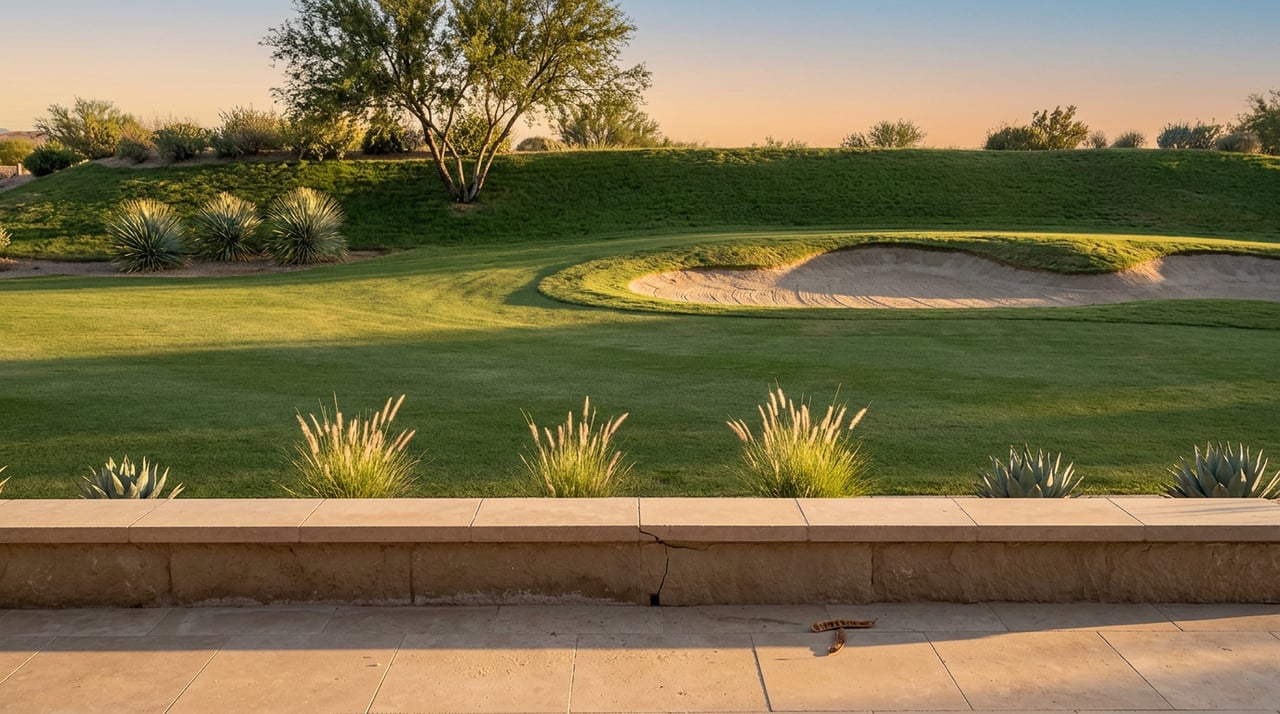
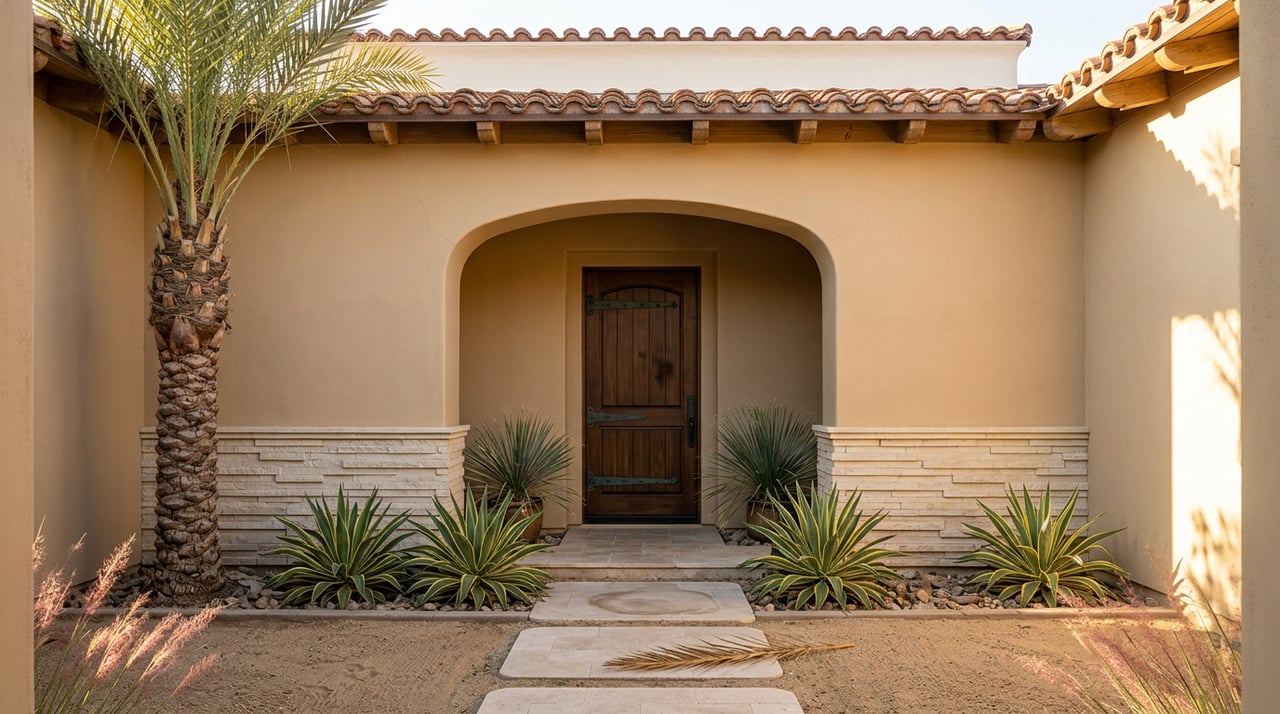
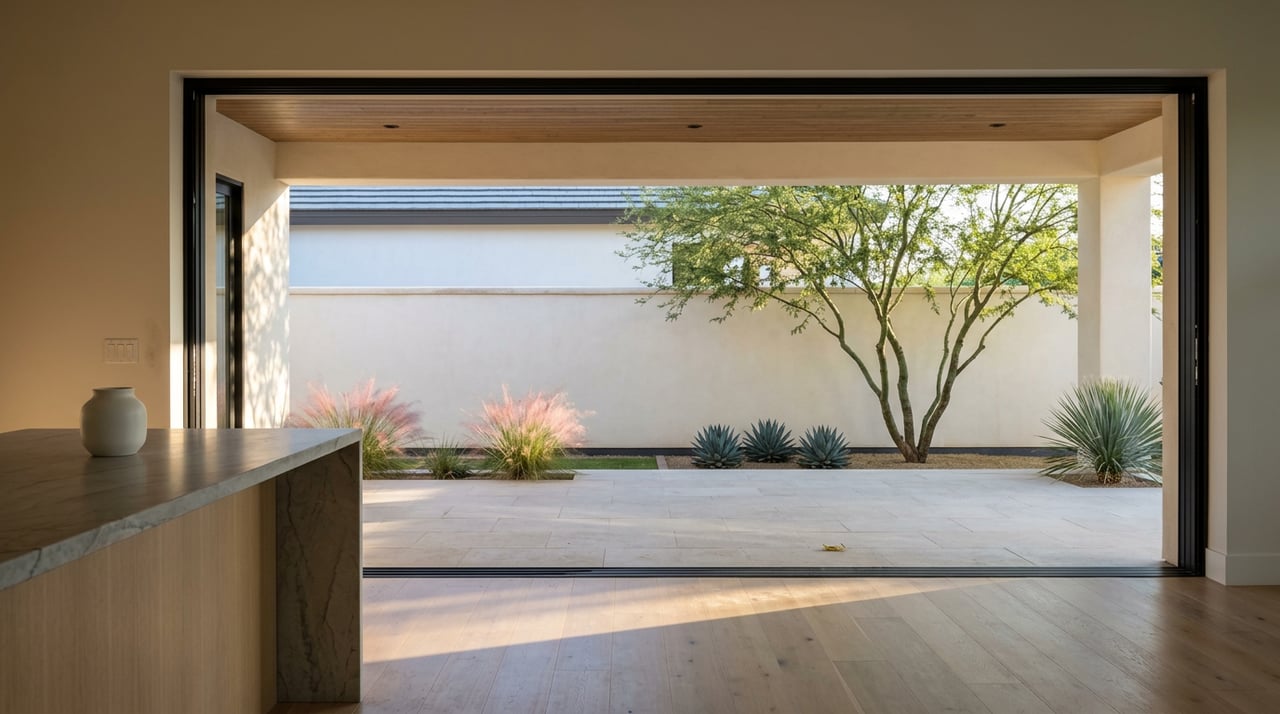
Open the portals for Section 10 this summer and the price column reads like a typo. A five bedroom in Castle Gate is listed at $850,000. A custom on S Tioga Way is asking $3.9 million. A Blue Heron show home on Olive Creek Court carries a $6.5 million tag. All three sit inside the same one square mile of West Las Vegas, on lots that start at half an acre and share the same zip code, the same grocery store, the same commute to the Strip.
The instinct is to treat that spread as noise. It is not. It is the entire thesis of buying here. Section 10 does not have comps in the way Summerlin or Green Valley have comps. It has land, and it has whatever someone chose to build on that land between 1972 and last Tuesday. Blue Heron's Prado infill has quietly reset the floor for what that land is worth, and every legacy custom around it is being repriced against a benchmark most sellers have not yet absorbed.
The Spread Is the Story
Here is what actually traded or listed inside Section 10's 89117 pocket in the first half of 2026, pulled from GLVAR MLS listings compiled by local brokerages:
| Sub-neighborhood | Beds / Sq Ft | Status | Price |
|---|---|---|---|
| Rancho Nevada Sub | 5 / 4,469 | Sold Feb 2026 | $1,365,000 |
| Sycamore Square 1 | 5 / 4,704 | Active | $1,890,000 |
| Section 10 custom | 6 / 6,910 | Under contract | $2,150,000 |
| Tioga Estates | 4 / 4,560 | Active | $850,000 |
| Castle Gate Phase 1 | 5 / 3,341 | Active | $1,820,000 |
| Monte Cristo Ct Amd | 6 / 3,571 | Sold Jan 2026 | $1,605,000 |
| Rancho Nevada #1 | 4 / 4,276 | Sold Jan 2026 | $1,678,000 |
| S Tioga Way custom | — / — | Active | $3,900,000 |
Look at the two 5,000 square foot ranges. A Sycamore Square home at 4,704 square feet is asking $1.89M. A Castle Gate home at 3,341 square feet is asking $1.82M. They are within $70,000 of each other on paper and 1,363 square feet apart in reality. That is not a pricing error. That is what happens when every home is a one-off and the lot underneath it does most of the talking.
Why the Comp Model Breaks Here
Section 10 covers 640 acres bordered by Desert Inn Road, Buffalo Drive, Sahara Avenue, and Rainbow Boulevard, and it developed the way almost nothing else in the modern valley developed. There was no master plan, no single builder, no design review board. Roughly 28 sub-neighborhoods filled in between 1972 and today at whatever pace individual lot owners felt like building. The result is that every property in the section sits on a minimum of half an acre, some on more than three, and almost none of them carry a meaningful HOA.
Take that apart and you get three consequences the median price on any portal will never show you.
First, the land is doing the pricing. Half acre and larger lots are functionally extinct in the modern Las Vegas Valley outside of a handful of custom pockets. Buyers who need RV parking, guest houses, sport courts, or private gates cannot manufacture that space in Summerlin or Inspirada at any price, which is why Section 10 inventory stays thin even in a rebalancing market. Only about 14 homes were active on the MLS through this listing pocket at the start of the summer.
Second, condition variance is enormous. A well maintained 1990s custom with a renovated kitchen and a functional pool competes with a 1978 ranch that has never seen a permit. Both sit on the same half acre. The appraiser has to reach for comps that may be two decades and two remodels apart, which is where transactions in Section 10 stumble more often than they do in a homogeneous tract.
Third, there is no HOA to enforce a design floor. That is a feature for owners who want to park an RV or build a casita, and a friction for buyers who assume the neighbor's frontage will look a certain way in five years. It is also why the highest and best use of a tired 1970s home on a Rancho Nevada lot is often a tear down, and why land trades increasingly reflect that logic.
What Prado Actually Changed
Blue Heron's Prado sits inside Section 10 off Palmyra and Tenaya, a gated infill enclave the builder assembled by buying a 10 acre parcel that had been passed between developers and cutting it into 18 half acre homesites. Chris Beucler, president of Blue Heron's Nexus division, described the site as "an old-school site that got sold to another developer" that his team then repurposed into semi-custom Vegas Modern homes ranging from 3,828 to 6,529 square feet.
Starting prices for Prado are around $2.07 million. The average home is selling for roughly $3.5 million. The 5,887 square foot show home at 7388 Olive Creek Court is listed at $6.5 million. In response to what Blue Heron calls Prado's success, the builder has released nine additional homesites down the street on Eldora Avenue and Montessouri Street, each now including a private casita with a covered patio as a standard inclusion.
Here is the mechanism worth pausing on. Before Prado, the ceiling in Section 10 was set by whichever legacy custom happened to be most recently renovated. After Prado, the ceiling is set by a builder who priced half acre modern homes at $600 to $1,000 per square foot and found buyers at that number. Every dated Section 10 lot is now being valued against the question of what a Blue Heron would sell for on it, minus construction time, minus the cost to demolish what is there. That is not a comp. That is a land residual calculation, and it is the reason a rebuilding buyer will pay more for a tired ranch than a lifestyle buyer will pay for a maintained one.
Where the Transaction Actually Gets Hard
The valley's June 2026 numbers describe a rebalancing metro. The median single family price landed between $472,000 and $494,000 depending on the source and the week. Active inventory sat near 2.6 months of supply. Days on market drifted to 36. Roughly a quarter of homes still cleared above ask, mostly in the $450,000 to $700,000 band in Summerlin and Henderson. Above $1.5 million, the average closing ratio has softened to around 96 percent of list and the average time to close has stretched past 60 days.
Section 10 lives entirely in that upper band, and the frictions look different from what most valley buyers expect.
- Appraisal reach. When the nearest true comp is either a 1978 legacy or a $4 million Blue Heron, appraisers routinely reach outside the section, sometimes into adjacent Section 11 or Section 4, and adjust heavily for age and lot. Financed deals stall more often here than in tract neighborhoods.
- Inspection depth. Homes built before 1980 in Section 10 predate current permitting norms. Buyers should expect additions and outbuildings that may not appear in county records, and Nevada's seller disclosure form leaves room for what the seller does not know as well as what they do.
- Land residual pricing. Sellers of tired homes on strong lots often underprice by pricing the house. Buyers of updated homes on the same street often overpay by pricing the finishes. The lot is the anchor either way.
- Thin inventory, patient buyers. With around 14 active listings in a typical month, buyers waiting for the "right" Section 10 house may wait six to nine months. That patience is usually rewarded, because the sellers who capitulate on price are almost always the ones whose homes need the most work.
Short Answers to the Questions Buyers Actually Ask
Does Section 10 have an HOA? Most of the section does not. A few small pockets carry one, but the great majority of the 640 acres are unassociated, which is why lot use varies so widely from street to street.
Is Prado the only new construction option here? It is currently the only production luxury builder inside Section 10. The nine additional homesites on Eldora Avenue and Montessouri Street are the most recent release. Everything else is legacy custom or a tear down opportunity.
How does Section 10 compare with Section 11 or Section 4? The adjacent sections carry similar large lot custom stock. Section 10's price premium reflects its proximity to the Strip, its Blue Heron presence, and thinner active inventory.
Are lots really half an acre or more? Yes. Every home in Section 10 sits on a minimum half acre, and a meaningful share exceed one acre. That is the single hardest thing to replicate anywhere else in the modern valley.
If you are weighing a Section 10 purchase or sitting on a legacy home here and wondering what the Prado effect means for your equity, the answer sits in the land, not in the last comp. Las Vegas Realty Specialists works through that math with buyers and sellers across the section, from Rancho Nevada to the newest Blue Heron releases, and would welcome a conversation.
Get a Free Home Valuation